5 Things to Review at Year-End Before Taxes
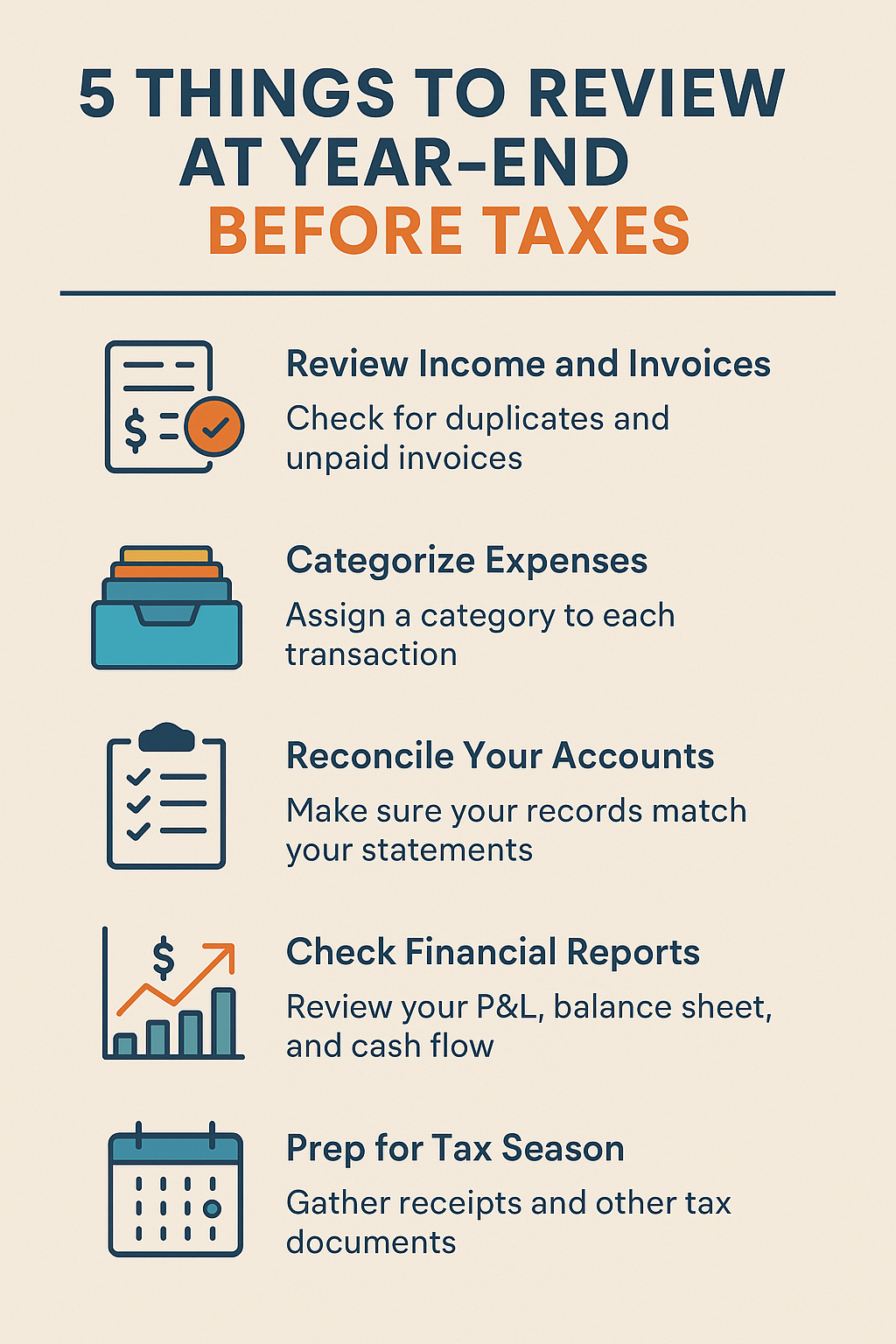
Don’t start the new year with a financial mess.
As the year winds down, it’s tempting to coast into the holidays and put off business bookkeeping until January. But doing a few key reviews now will save you a ton of stress later — and might even reduce your tax bill.
Whether you're a solo cleaner, contractor, or small service-based business owner, here's your year-end checklist to get your books tax-ready.
1. Review All Income and Outstanding Invoices
Start by checking your total income for the year. Does it look accurate?
Now check for:
Unpaid invoices: Follow up with clients who still owe you
Duplicate income entries: Especially if you use multiple payment processors (Venmo, Zelle, Square, etc.)
Cash income: Did you record all non-digital payments?
Pro tip: Clean books now = fewer questions from your tax preparer later.
2. Categorize All Expenses
Make sure every transaction has a clear category.
Look for:
Unlabeled transactions (“uncategorized expense” is your enemy)
Personal expenses mixed into business accounts
Recurring charges you no longer use (cancel them!)
End-of-year purchases that can reduce your taxable income (e.g., tools, supplies, software)
If you’re behind, now is the time to catch up your bookkeeping before tax season arrives.
3. Reconcile Your Accounts
Reconciling means comparing your books to your bank and credit card statements to ensure they match.
Things to reconcile:
Business checking accounts
Credit cards
PayPal, Stripe, or other payment processors
Loans or financing accounts
Reconciling monthly is ideal — but if you haven’t done it in a while, year-end is your must-do moment.
4. Check Your Financial Reports
Run these reports to get a snapshot of your business health:
Profit & Loss (P&L): Shows your income, expenses, and net profit
Balance Sheet: Shows assets, liabilities, and equity
Cash Flow Statement: Shows how money flowed in and out over the year
Review these to:
Spot any surprises
Identify trends
Make adjustments before year-end (like boosting deductible expenses or planning Q1 pricing)
Not sure how to read your reports? I can help walk you through them.
5. Prep for Tax Season
Get ready to hand things off to your CPA or tax preparer by organizing:
All income documentation (including 1099s, if you’ve received any)
Expense receipts or digital records
Mileage logs
Asset purchases (equipment, vehicles, etc.)
Loan documents
If your books are clean, your tax prep will be fast, accurate, and might even cost you less.
Bonus Tip: Don’t Wait Until January
January is for planning and growing — not scrambling to find old receipts or fix your books.
If you're behind or unsure, getting help from a bookkeeper before the year ends can save you money, time, and stress.
Need help reviewing your books before year-end?
Let’s do a free Bookkeeping Health Check and make sure you’re set up for tax success.
Contact us by click here
or send us an email at David@RuckandReconcile.com
Check out our services here
Learn more about Ruck and Reconcile here
And as always, thanks for reading and we’ll see you next week!